
The Intervention
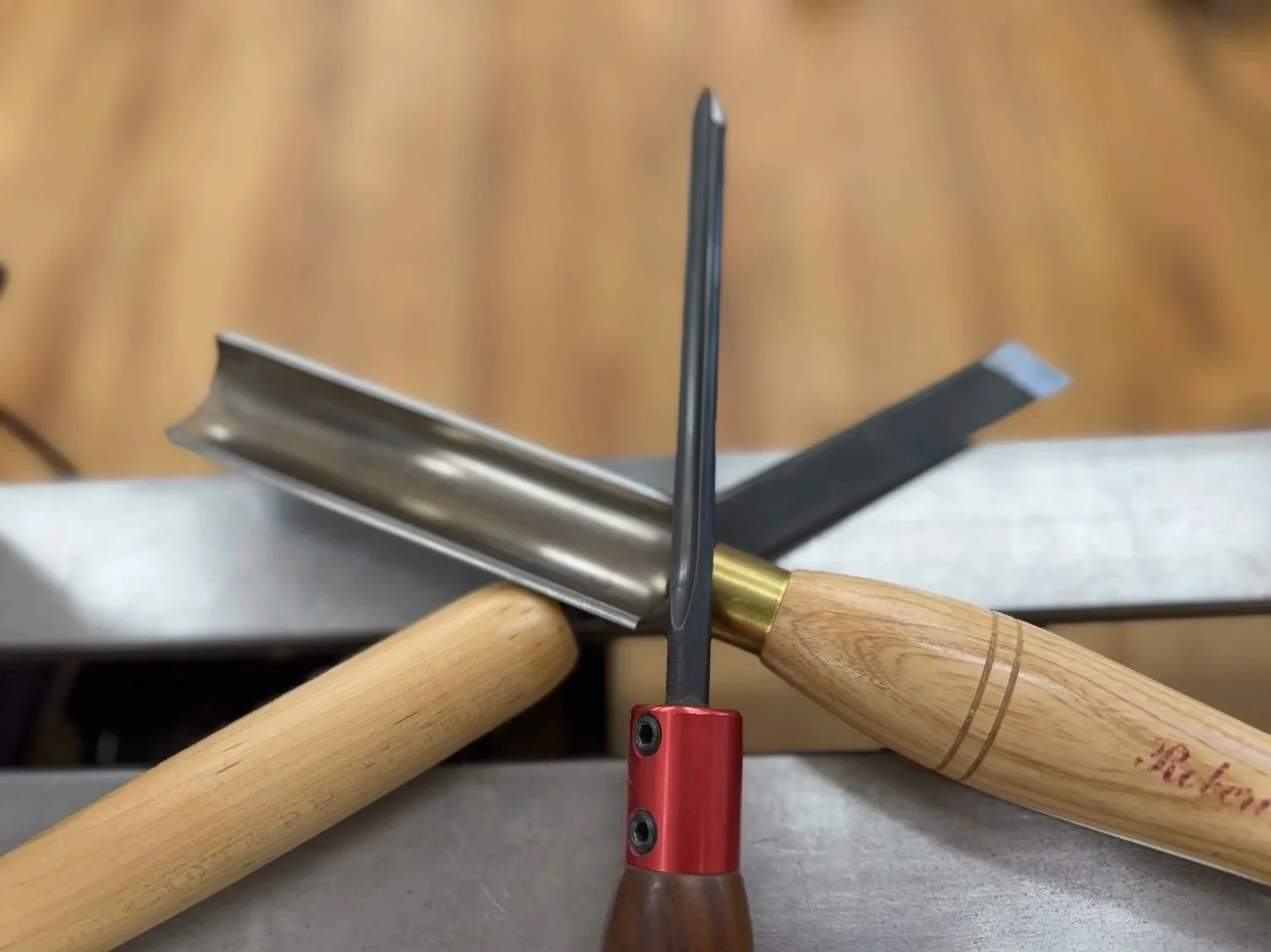
I was tight with the spindle roughing gouge and the skew. Cliff Greaves believed I should see other tools.
A few weeks ago, I told you how I got into woodturning and was promptly catapulted down the rabbit hole. There’s a saying among woodturners that the lathe is just the down payment.
That turned out to be 100% true.
Not long after I first tried turning on my dad’s lathe, I realized it was, shall we say, a little more rustic than the ones I was using at Chapel Hill Woodturners. Dad’s lathe had three speeds, determined by the placement of a questionably dry-rotted, exposed belt. Tension on that belt was maintained by a piece of baling twine wrapped around a nail on the lathe stand.
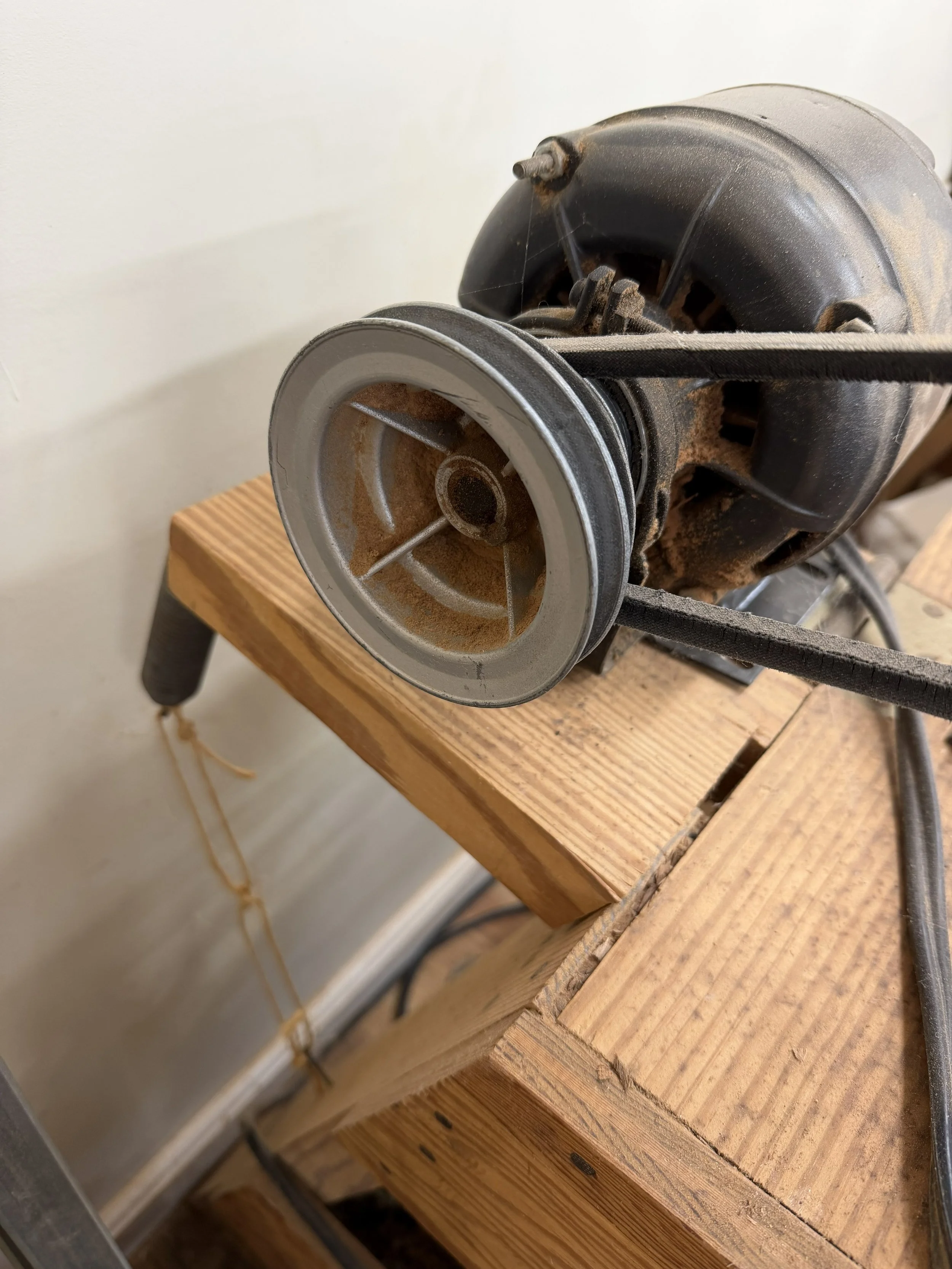
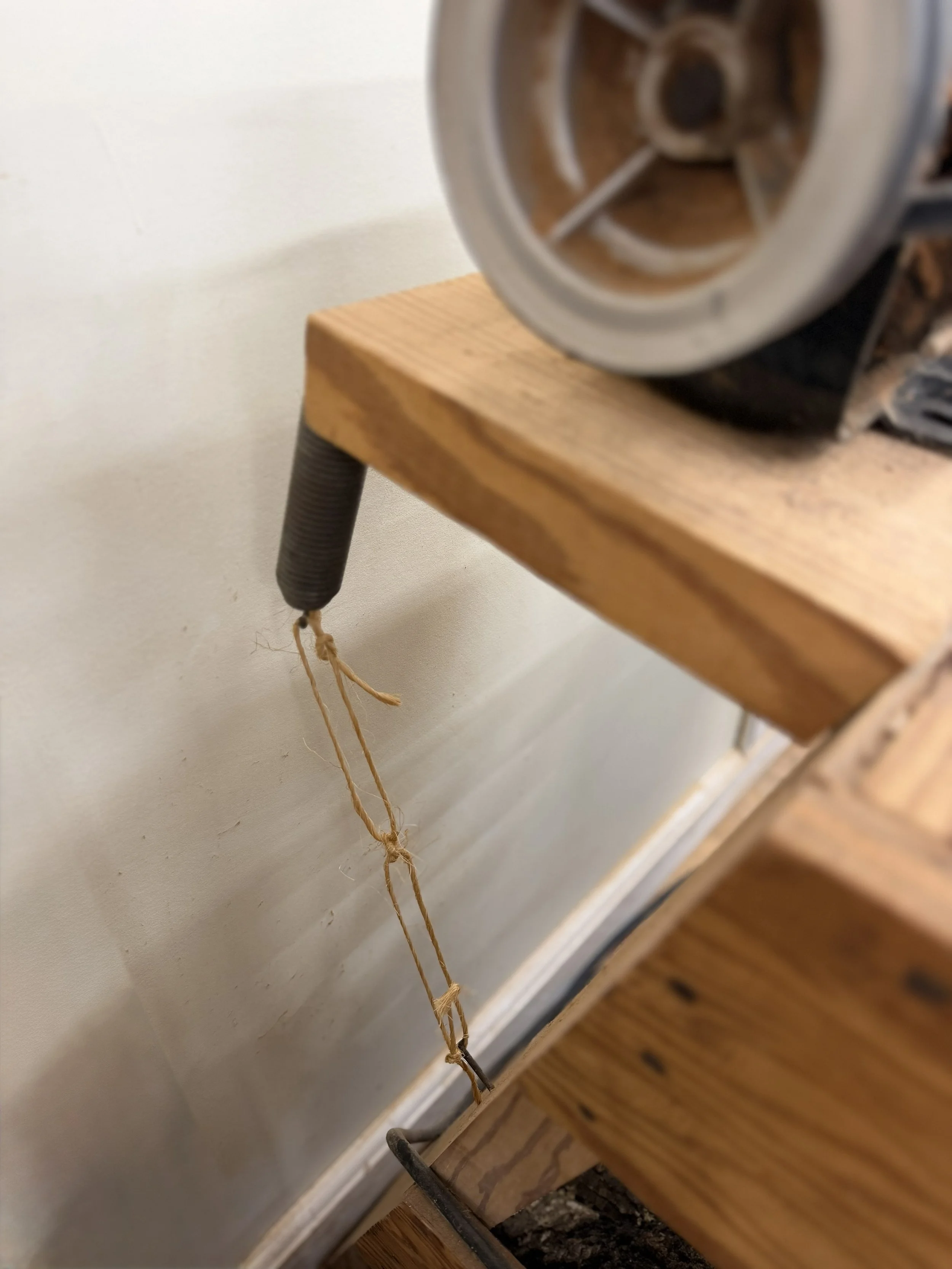
Yes, that is baling twine. No, this was not a temporary repair.
It may not surprise you to learn that I began looking at other lathes.
By then, those Friday turning sessions at the club had rapidly become sacred to me, and I had gotten to know another woodturner named Cliff. He had recently upgraded from his midi lathe to a full-sized one and made me an incredibly generous offer: he would sell me his immaculate, gently used midi lathe for a very reasonable price.
So I acquired the lathe.
And then I began acquiring tools.
Frank had suggested that I buy unhandled tools so I could make handles customized to fit my hand—and gain turning experience in the process. For several months, I worked my way through handle after handle for my growing collection of new toys.
Eventually, I earned the moniker Handle Queen.
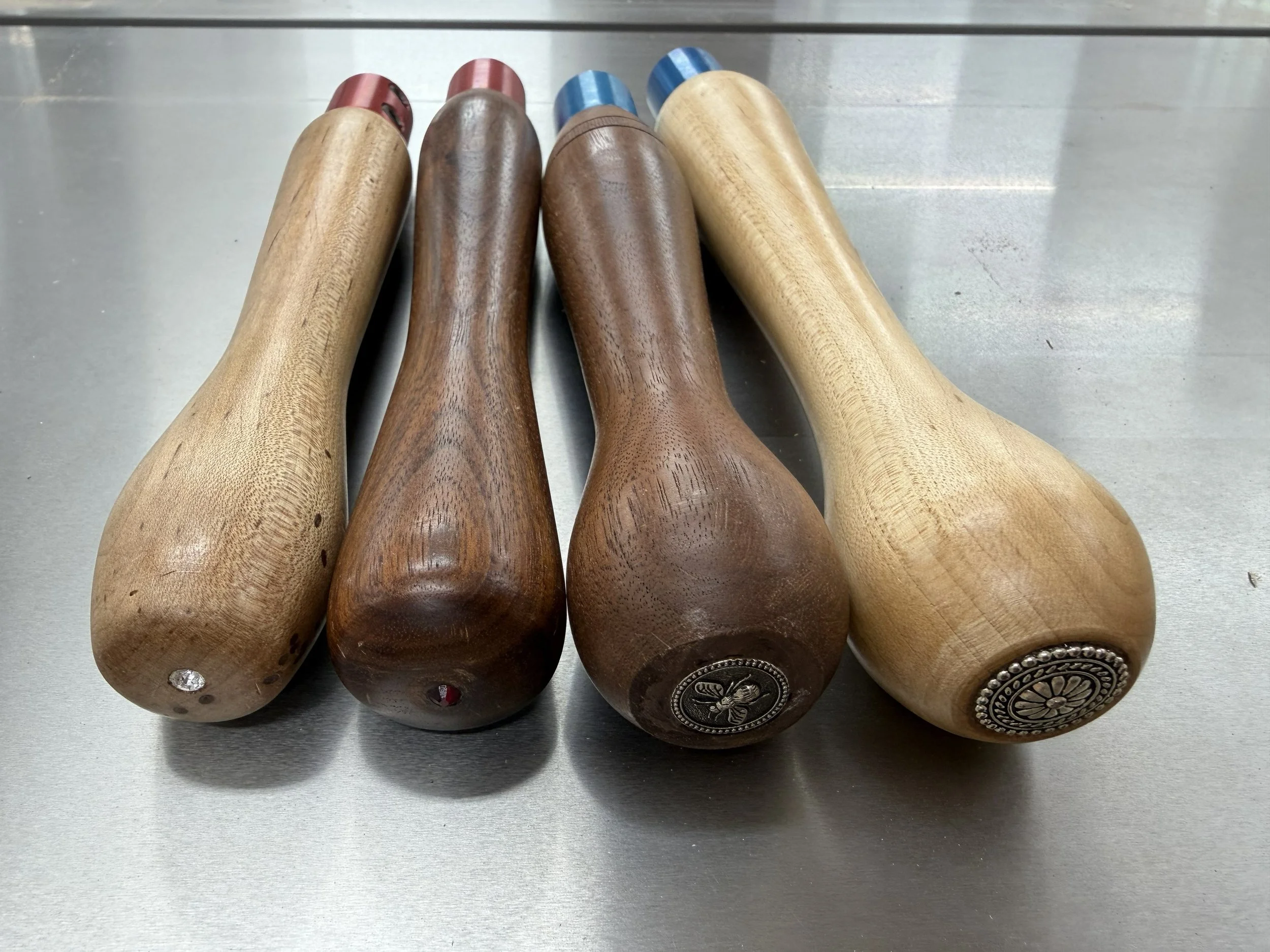
Treasured tools from my reign as Handle Queen—and still very much in active duty today.
The irony was that while my collection of tools was expanding nicely, my actual working repertoire was not.
I was in an exclusive relationship with my spindle roughing gouge and skew.
One Friday, Cliff appeared at my lathe carrying a spindle gouge and wearing the particular expression of someone who had already made a decision on my behalf.
“We need to broaden your vocabulary.”
Apparently, I was going to see other gouges.
Cliff set about teaching me how to use the spindle gouge.
Learning to turn beads and coves with that tool was one of the more humbling learning experiences of my life. Many years ago, I had a friend named Butch who was a horse whisperer in the truest sense. He used to tell me that everything in this world is connected through three things: feel, timing, and balance.
Trying to turn a proper bead with a spindle gouge proved just how right he was.
Woodturners learn the A-B-C’s: Anchor. Bevel. Cut.
It sounds deceptively simple.
In reality, you’re lifting the handle enough to present the cutting edge to the wood while riding the bevel, drawing the handle around in an arc, and moving the gouge along the tool rest—all at the same time. Every movement in that little dance affects the size and shape of the curve.
Get one of them wrong and you may experience the exciting phenomenon known as a catch, during which the gouge is rather enthusiastically driven into the wood, wrecking your lovely bead, startling the daylights out of you, and creating what woodturners optimistically call a design opportunity.
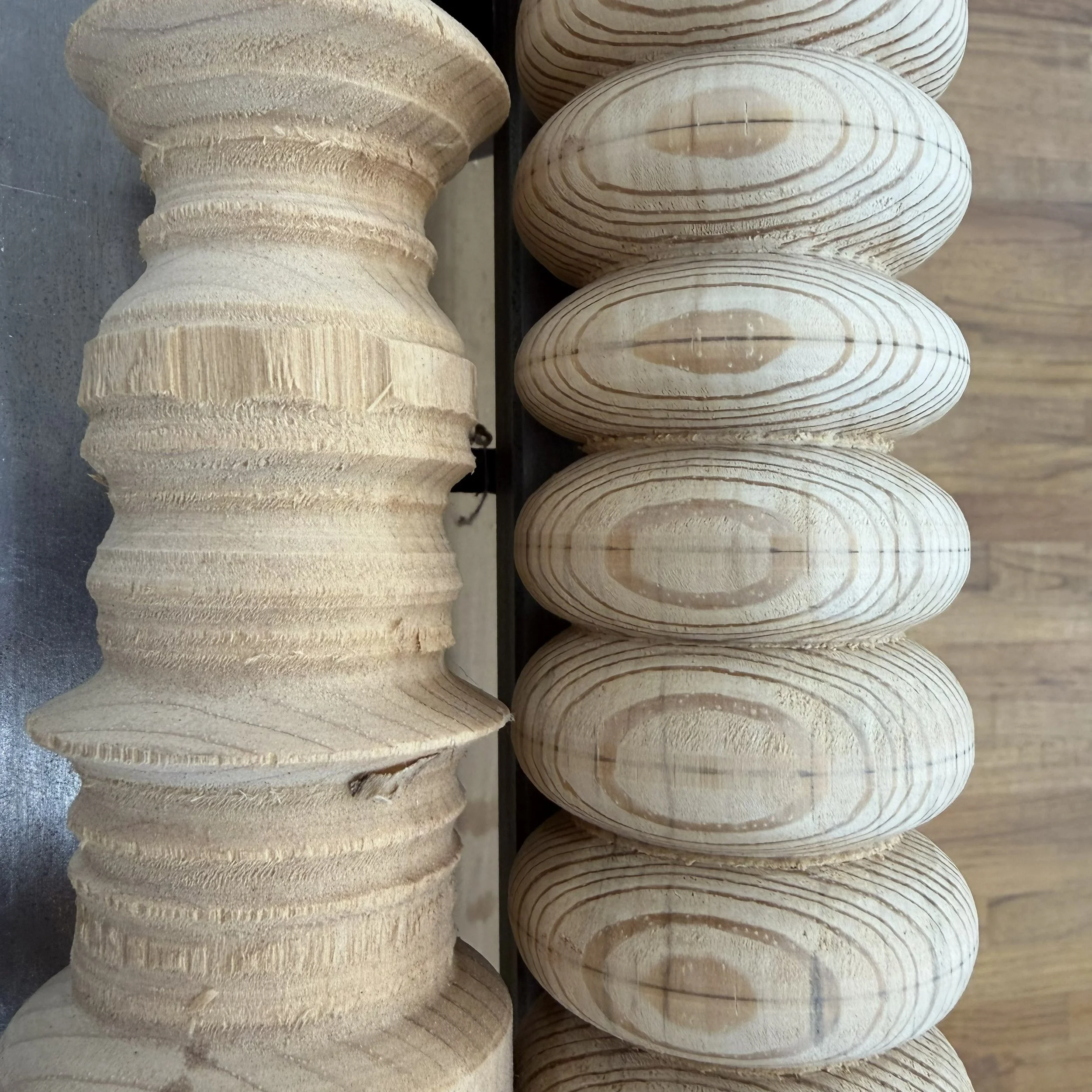
Early evidence that the spindle gouge and I were not immediately destined for harmony. The improvement suggests Cliff’s efforts were not entirely wasted.
For several Fridays, Cliff patiently—but persistently—continued his intervention into my woefully limited woodturning vocabulary.
And it wasn’t his last intervention.
Eventually, I became reasonably comfortable using the spindle gouge.
Sharpening it was another matter entirely.
So for two consecutive Fridays, Cliff gave up his own opportunity to turn and stood with me at the grinder.
Tool after tool.
Again and again.
He watched. He corrected me. He explained what I was doing wrong. Then he explained it again, because sometimes I am a little thick and apparently require repetition.
By the end of that second Friday, something finally clicked.
I could sharpen my tools.
More importantly, I understood what I was doing well enough that, for a period of time, I became responsible for maintaining the tools at the club.
That knowledge stayed with me. Today, I’m comfortable teaching other people how to sharpen their tools.
I like that part.
Cliff gave up two Fridays at the lathe to teach me something I couldn’t yet do. Now I get to pass it along.
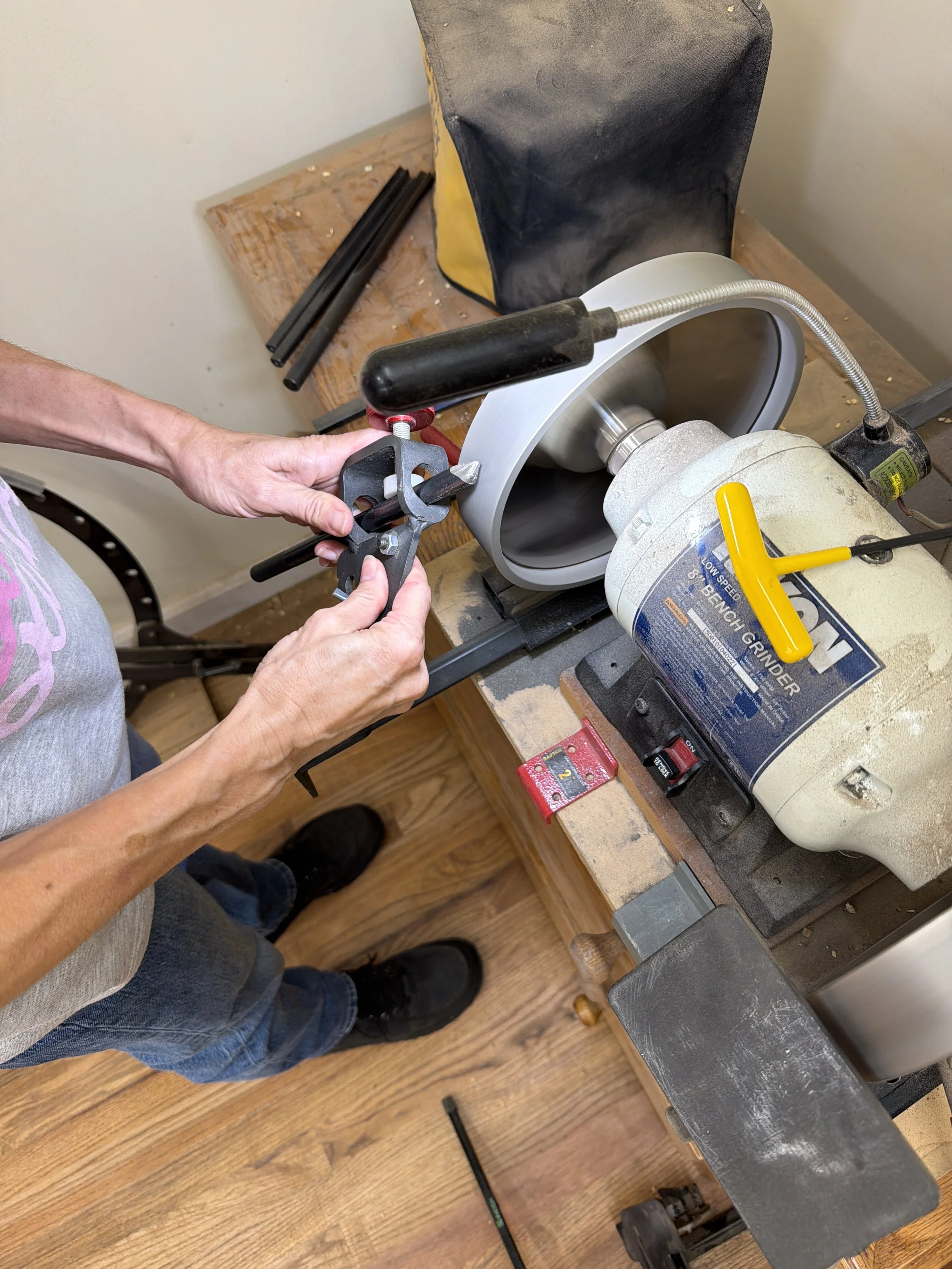
The lesson stuck.
Somewhere between the spindle gouge and the grinder, Cliff and I also became really good friends.
And then something more than that.
Over the years, Cliff and his wife, Louise, and Nate and I have shared dinners, stories, celebrations, and a whole lot of life. Cliff has remained one of my biggest cheerleaders in the club—which is saying something, because I have been extraordinarily lucky in that department.
He was also one of the people who heard me repeatedly declare that I was never going to become a bowl turner.
Not once.
Not twice.
Apparently there are records.
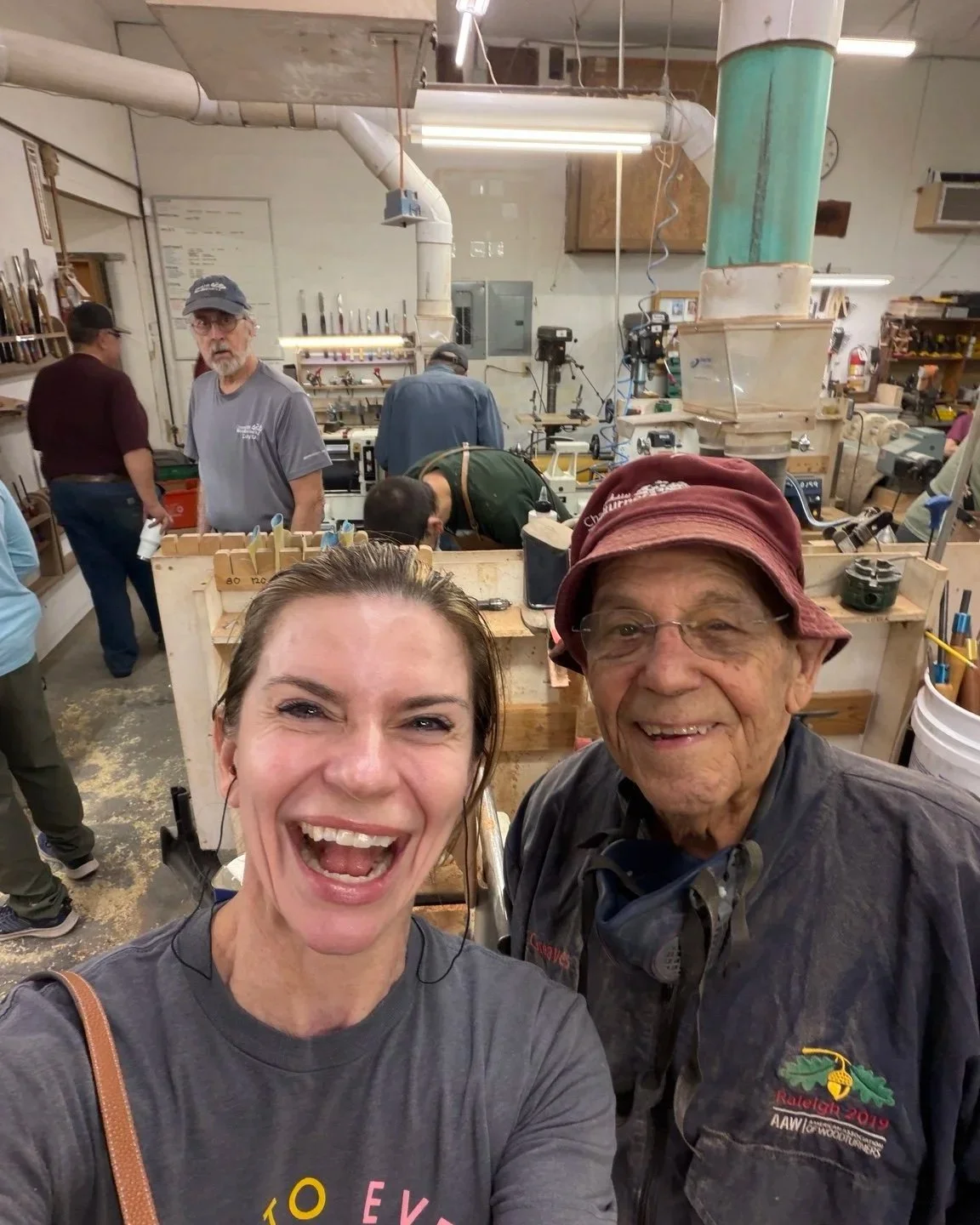
Cliff and me, back where it all began
On the day I worked my first shift at Cary Gallery of Artists, Cliff and Louise stopped by to see me and my work. Things were quiet, so we had time to visit before wandering over to my display.
I told Cliff how much I’ve been enjoying turning hollow forms.
To be fair, my favorite thing to turn is frequently whatever happens to be on my lathe at the moment.
Still.
Cliff gave that small, delighted chuckle of his. He got a little twinkle in his eye.
“This from the woman who was afraid to turn bowls.”
Then he reminded me that there were not one, not two, but at least twenty documented instances of my declaring that I was never going to be a bowl turner.
I cannot independently verify his count.
I can confirm that twenty sounds low.
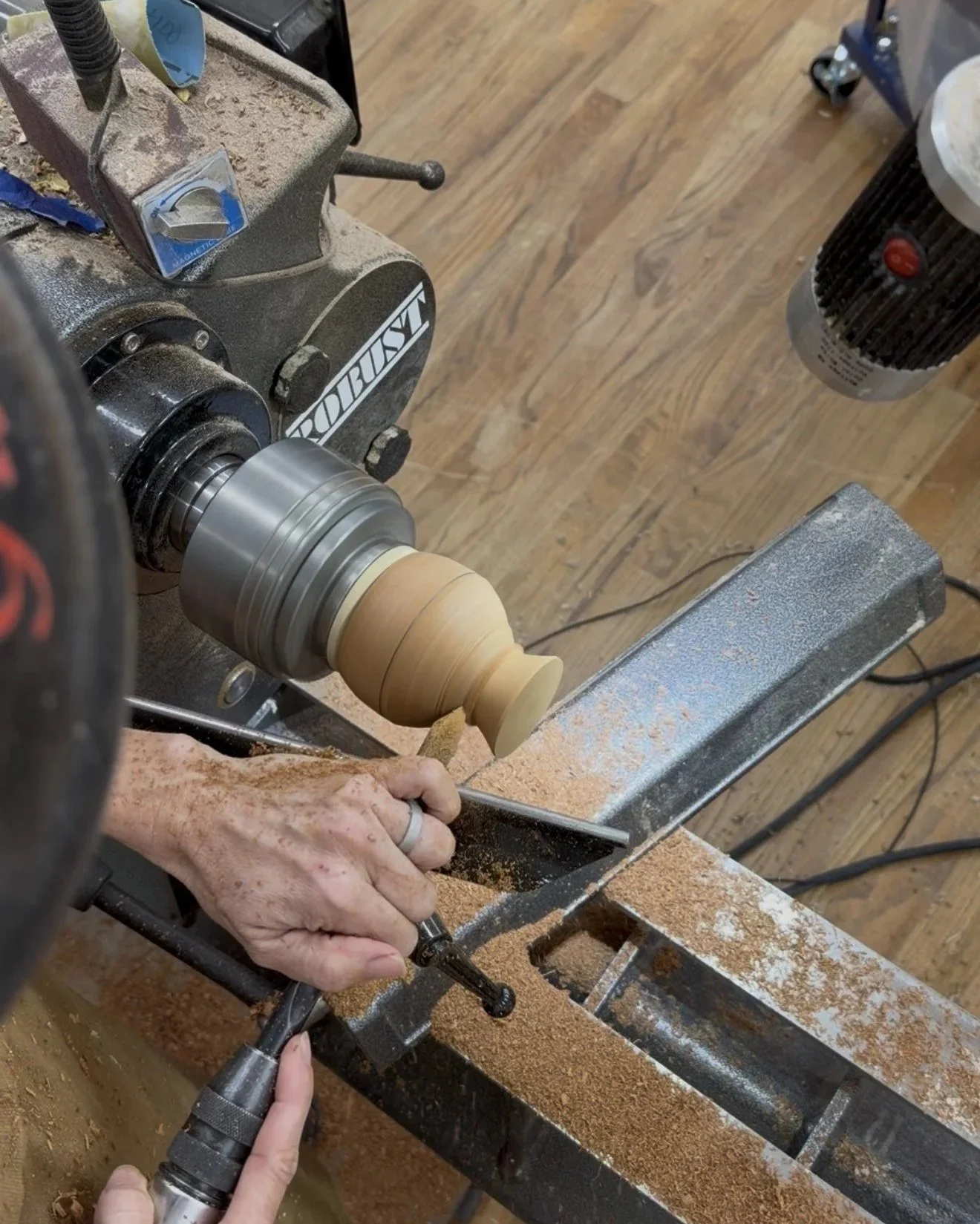
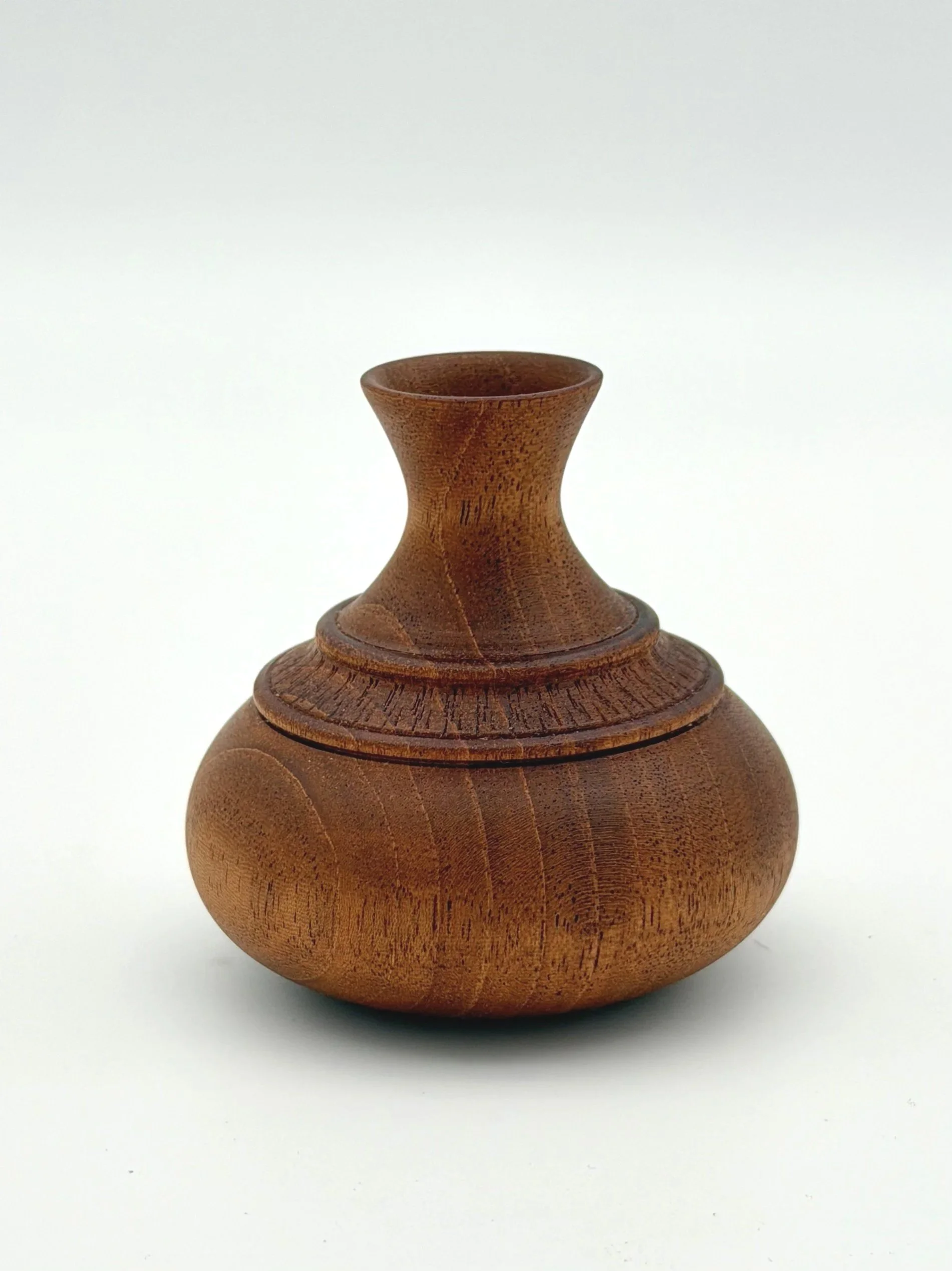
The vocabulary has expanded.
Cliff seems to feel reasonably vindicated by all of this.
I understand why.
He was one of the people who kept nudging me past the places where I had decided I was comfortable. First another gouge. Then the grinder. Eventually, an entire category of turning I had sworn I would never touch.
But when I think about what Cliff gave me, I don’t really think first about spindle gouges or sharpening.
Cliff was a huge part of why Chapel Hill Woodturners began to feel like family.
And somewhere along the way, he and Louise stopped feeling like family.
They simply became family.