
Worth Turning?
From Feral Log to Gallery Piece
Last week, I told you how I was propelled headfirst down the rabbit hole of woodturning. Since that rabbit hole eventually landed me at the Cary Gallery of Artists, this seemed like a good time to hop forward and show you one of the pieces I’ve been working on for the gallery.
Almost everything I turn comes with some kind of history or backstory. My mom calls it “heritage wood”—wood that arrives with a story attached.
This particular story begins with a log I wasn’t entirely sure I wanted to touch.
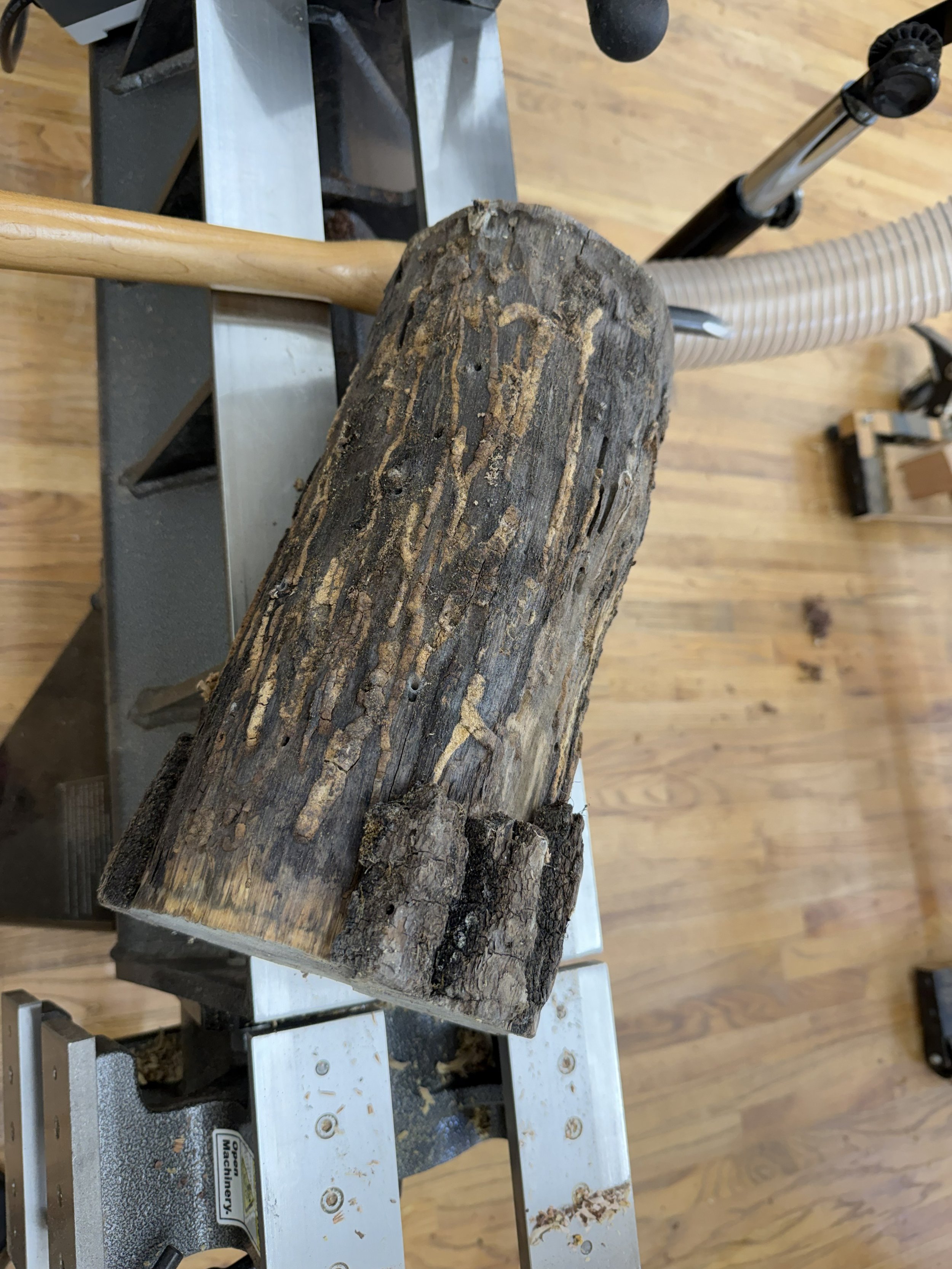
Persimmon, displaying all of its considerable charms.
Should I turn it?
👍 or 👎?
If you said “no,” I completely understand.
Spoiler alert: I turned it anyway.
A few years ago, I attended a weeklong class at the John C. Campbell Folk School taught by Nick Cook—an outstanding woodturner, gifted teacher, and genuinely wonderful human being. Another student had driven all the way from Missouri with the bed of his truck absolutely loaded with wood.
One of the things I love about woodturners is that we have a very different definition of treasure than most people. We see possibility where others see firewood. We trade logs, offcuts, burls, branches, and oddball pieces with the enthusiasm that other people reserve for baseball cards.
This gentleman generously shared several beautiful pieces with me: flame box elder, corkwood, sweetgum…all nice, clean, polite pieces of wood that I couldn’t wait to bring home.
Then he handed me a piece of persimmon.
Let’s just say…it had personality.
It was wet and slimy, as evidenced by the slugs happily crawling across it. It had that unmistakable damp, earthy smell that suggested it had been sitting exactly where nature intended and was destined to return to earth in short order. Ants—and several other insects with more legs than should be legal—had established residency beneath loose pieces of bark that somehow refused to come off despite my best efforts to remove it.
I was not excited.
“Repulsed” is probably the more accurate word.
But like nearly every woodturner I know, I suffer from an incurable condition: I cannot say no to free wood.
So, home it came—in a garbage bag to contain its complex ecosystem—and was promptly banished to the back corner of my garage. It spent the next few years quietly occupying space while I mostly forgot about it and, frankly, preferred not to look too closely at it.
Fast forward to this summer.
I’ve been experimenting with resin.
While I’m not particularly fond of adding plastic to wood, I dislike throwing away beautiful wood even more. Sometimes resin isn’t about introducing flashy colors or dramatic effects. Sometimes it’s simply about giving a damaged piece another chance.
I started wondering whether that forgotten persimmon log might have been hiding something worth discovering all along.
As soon as I mounted it on the lathe, the cracks told me this wasn’t going to be an ordinary project.
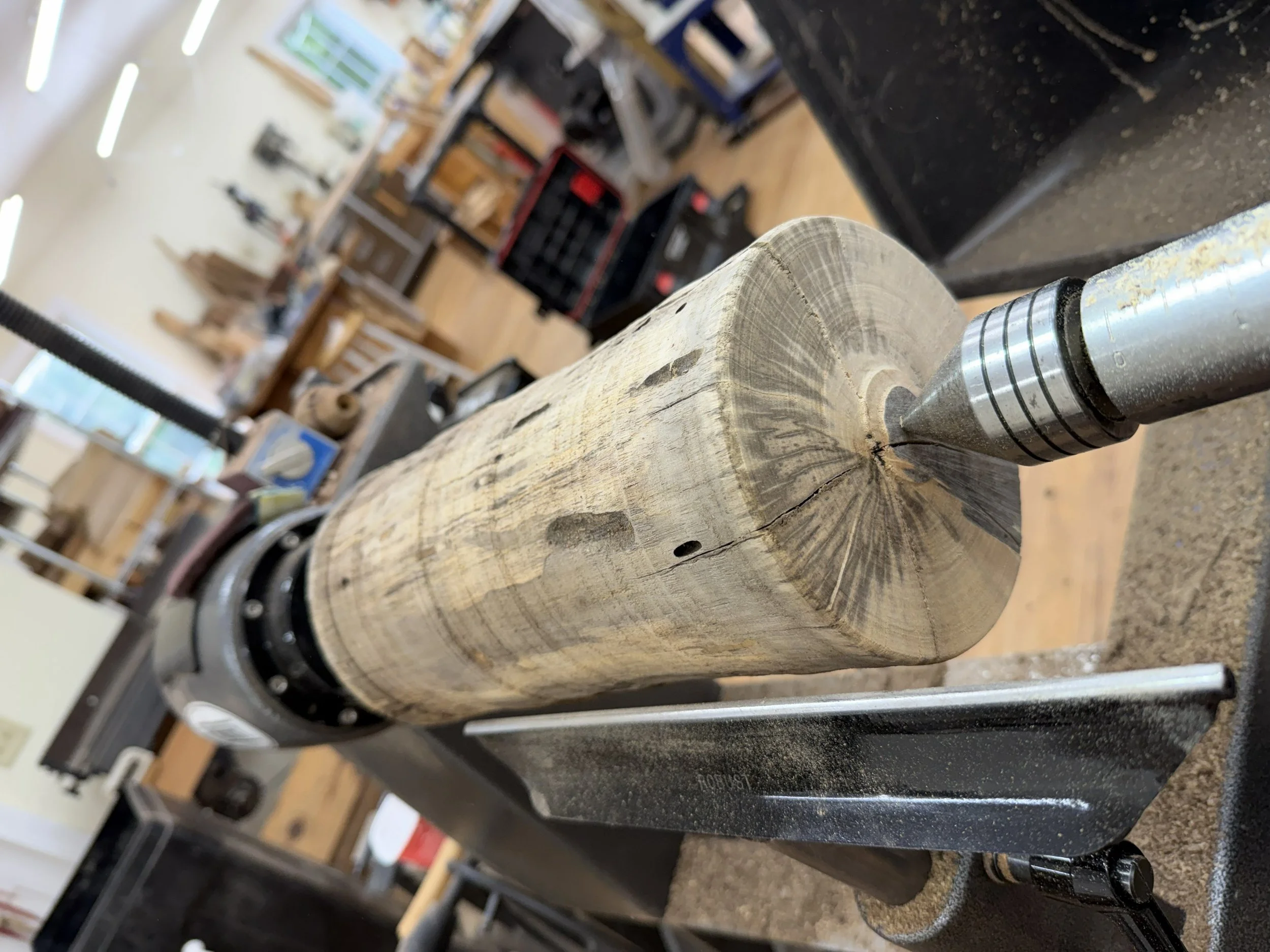
A Collection of Firsts
This hollow form became a collection of firsts.
It was my first piece where resin wasn’t merely decorative—it was necessary for the structural integrity of the piece. My first time turning persimmon. My largest deep hollowing project. And my first time using a steady rest.
At nine inches tall, it’s still fairly small as hollow forms go, but it was larger than anything I had attempted to hollow this deeply before.
I wasn’t sure whether to be excited by the opportunity to acquire another tool or horrified by the damage to my wallet.
Either way, I ordered one.
As it turns out, free wood can get expensive.
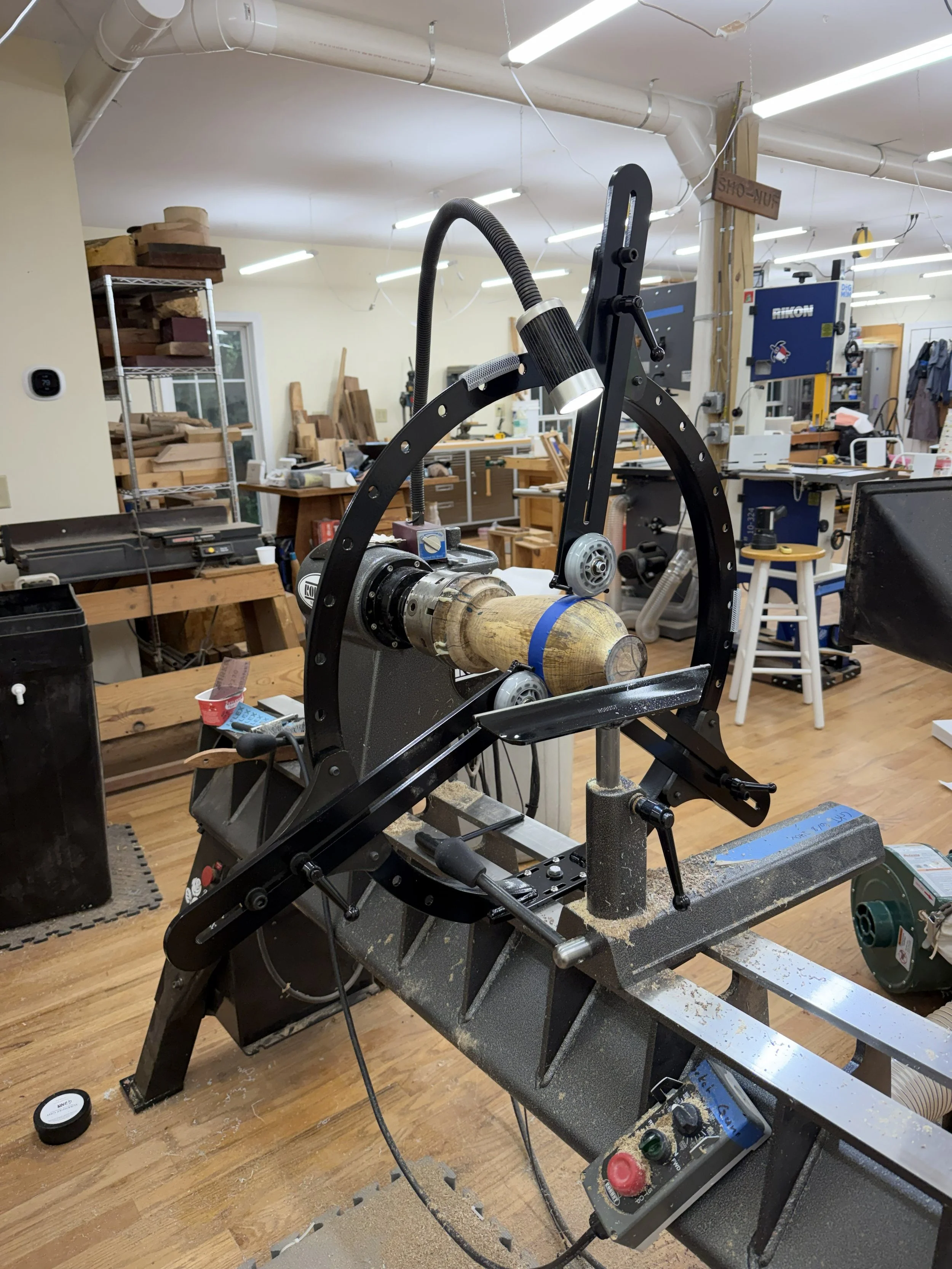
Apparently this free log required another tool.
With the steady rest supporting the piece and my trusty Trent Bosch hollowing system doing the work inside, the hollowing itself went surprisingly smoothly.
Then I had to finish shaping the outside.
I had deliberately left extra wood near the bottom while hollowing because removing it earlier would have made the piece less stable. Once the inside was finished, I could finally refine that taper and bring the exterior to its final shape.
There were a few moments of excitement.
A few moments of frustration.
More than once I found myself muttering, “Uh oh…” to absolutely no one.
And more than a few moments when I simply stood at the lathe staring at the piece and wondering, “Well…now what?”
But that’s part of the joy of making.
Every project leaves its mark. The tree’s growth rings were already there. Mine are still accumulating.
Want to See the Baby Pictures?
The transformation is probably easier to show than explain.
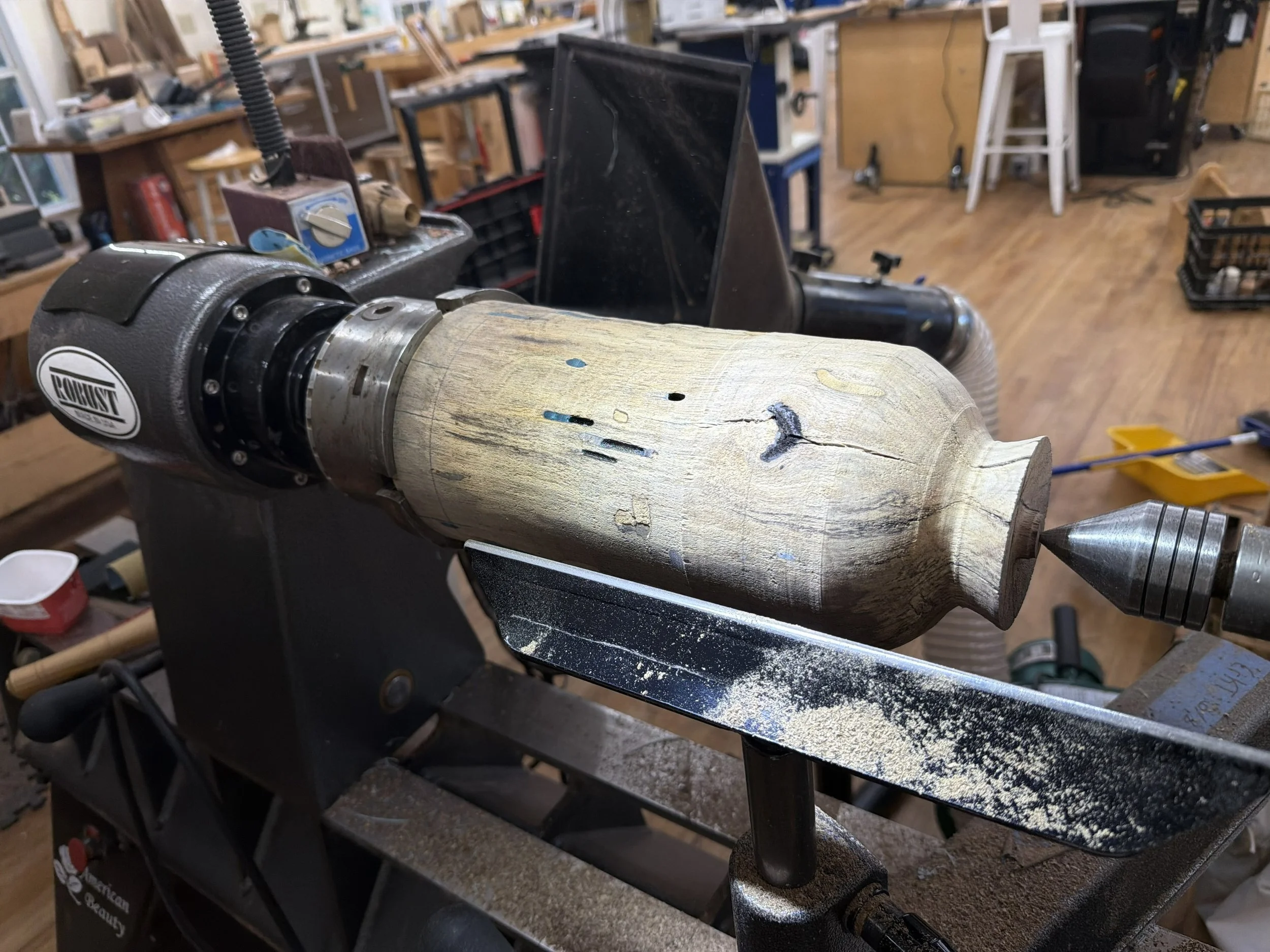
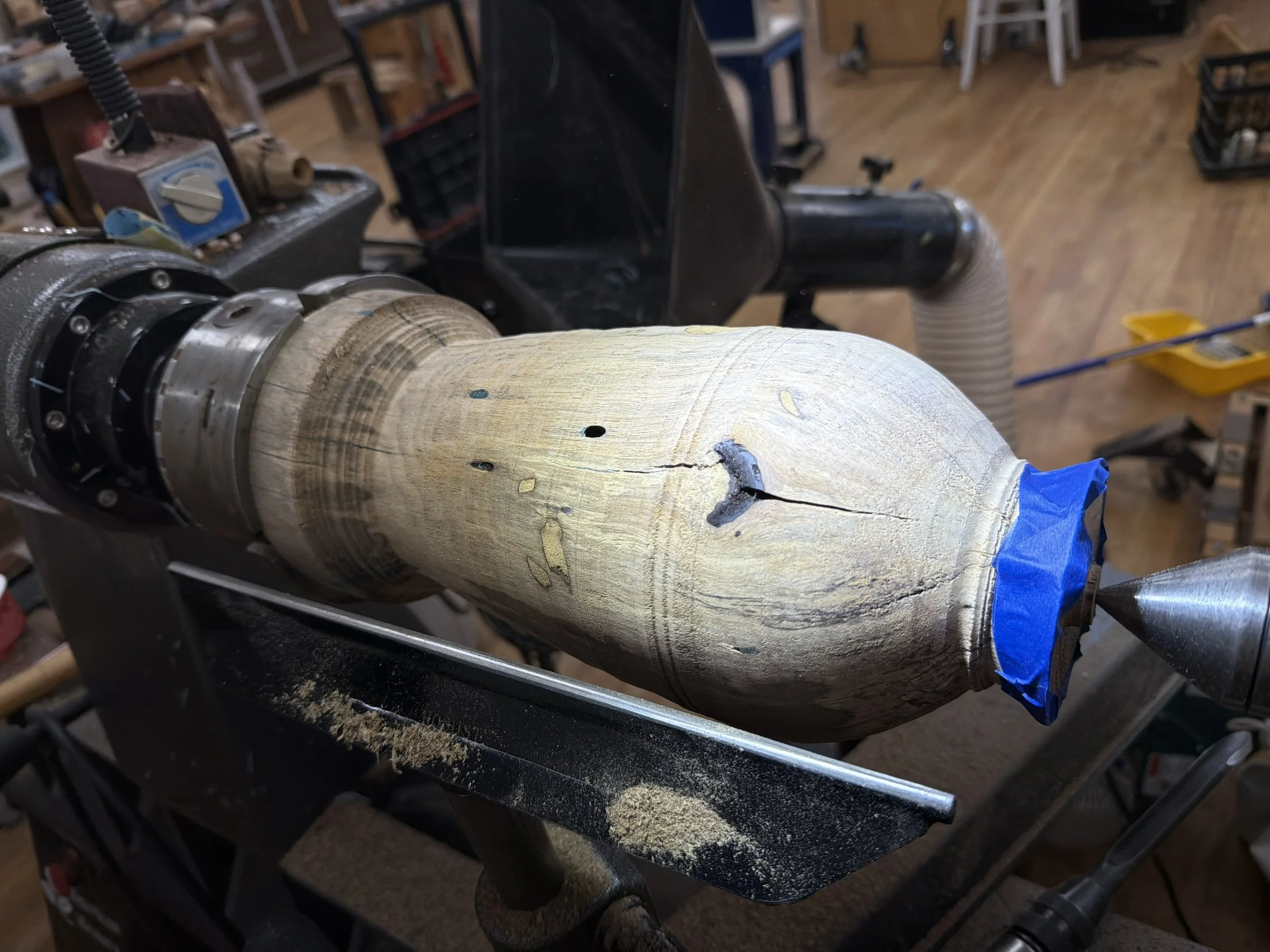
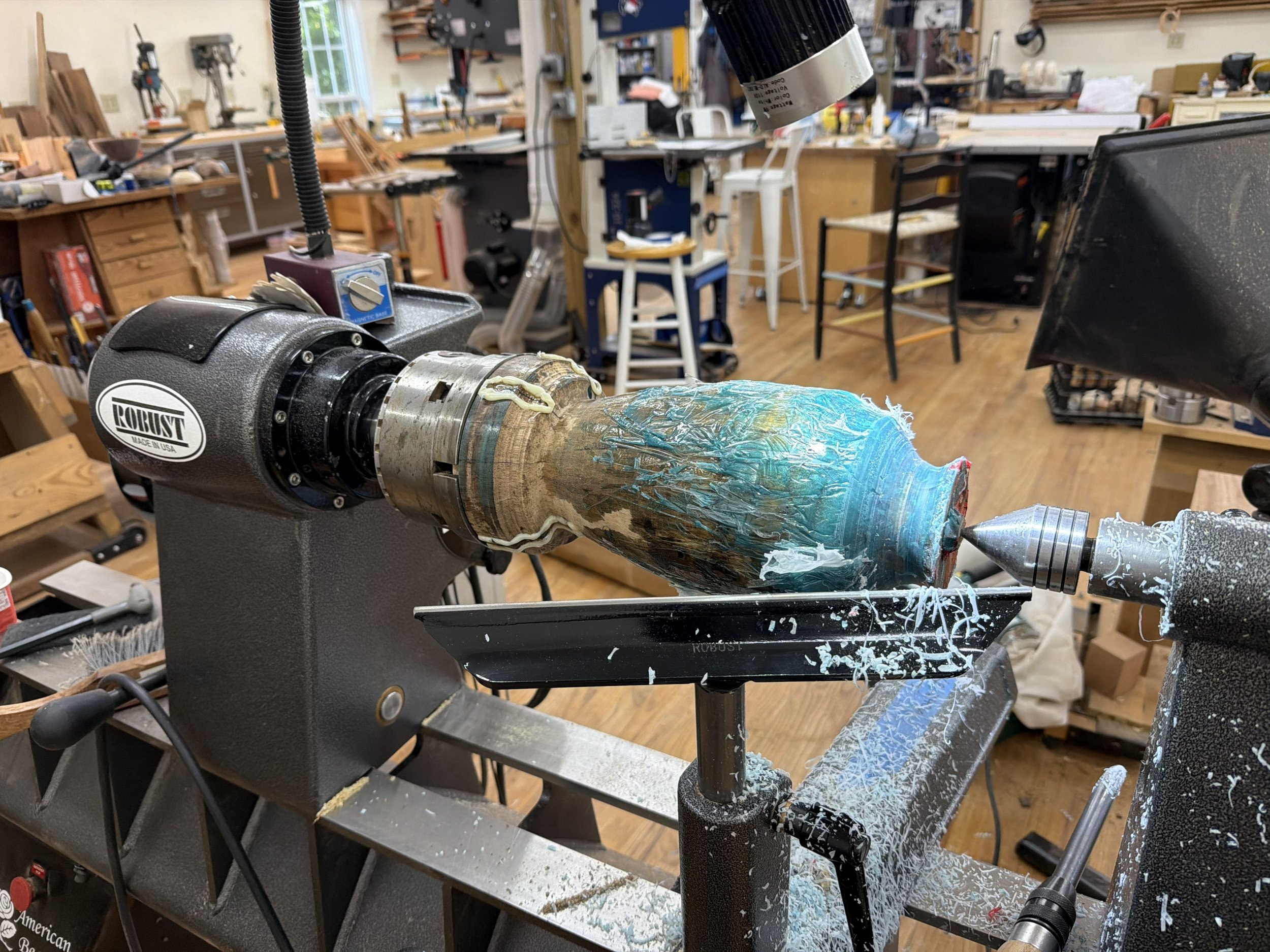
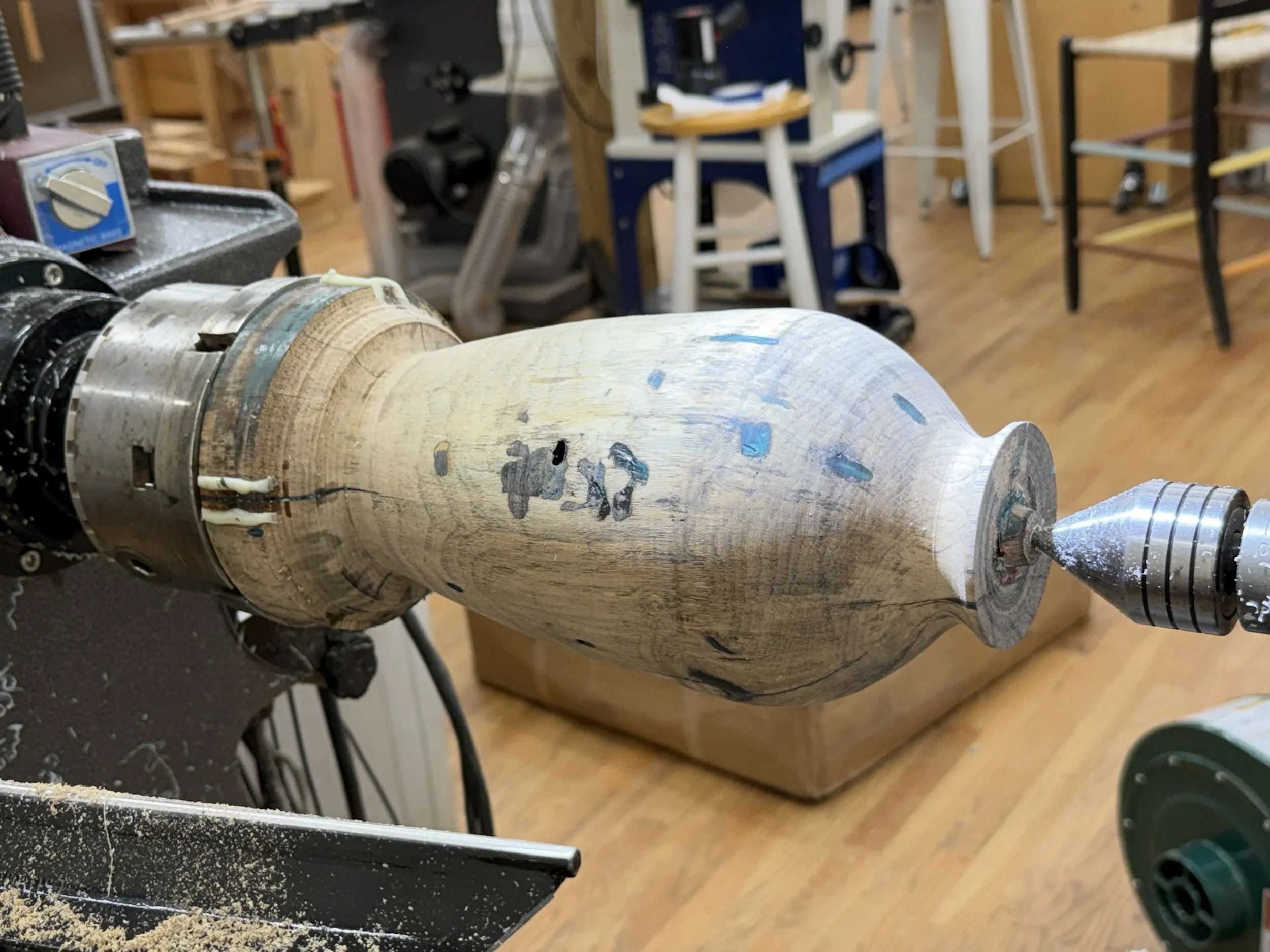
And then something almost suspicious happened:
Everything went well.
The resin held. The wood held. I finished the taper, sanded the piece, cut it free from the tenon, flipped it around, and cleaned up the bottom.
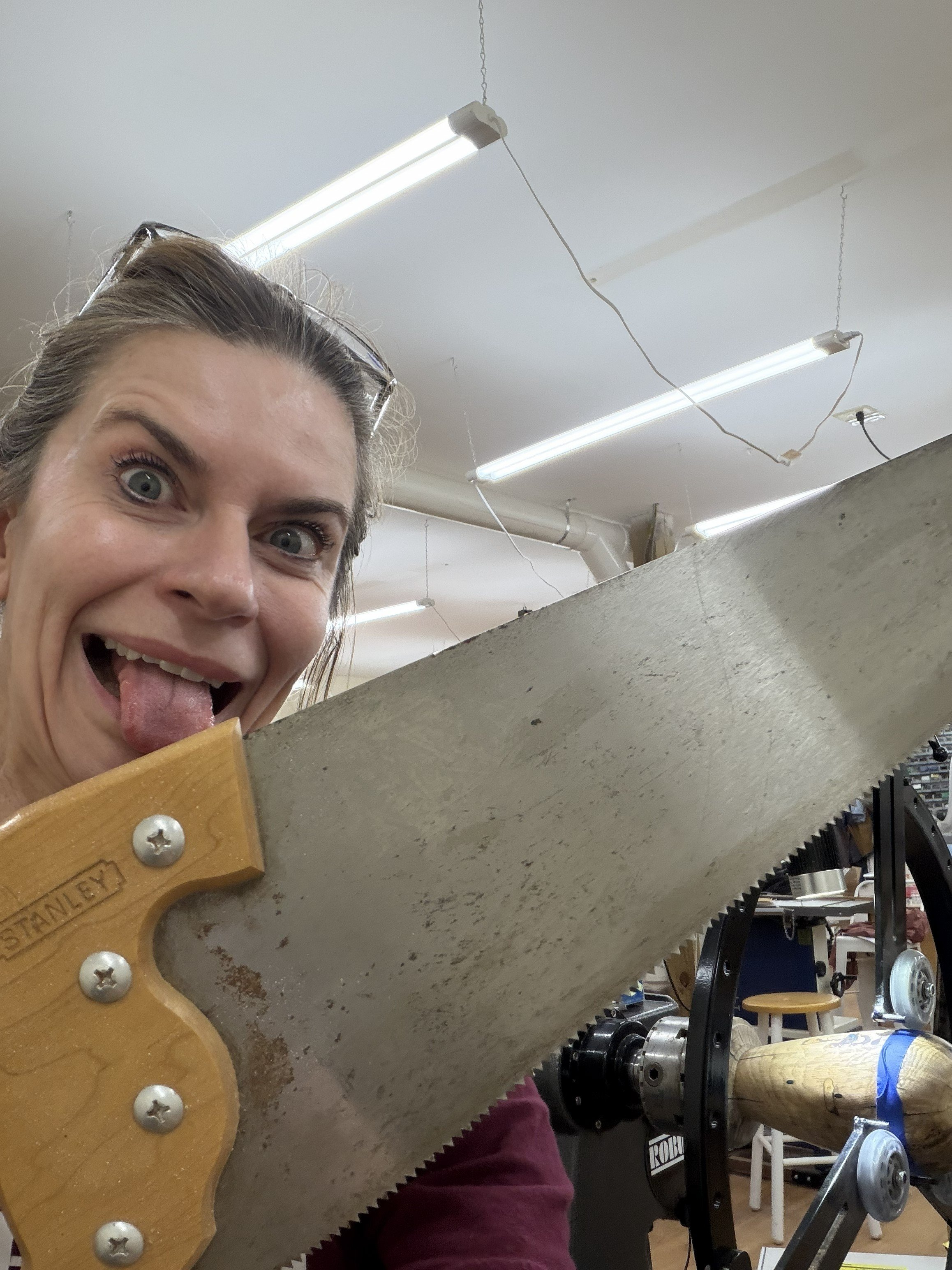
The highly sophisticated final separation technique.
So, Should I Have Turned It?
Yes.
The damp, slug-covered piece of persimmon that once traveled home from Missouri in a garbage bag is now a nine-inch hollow form.
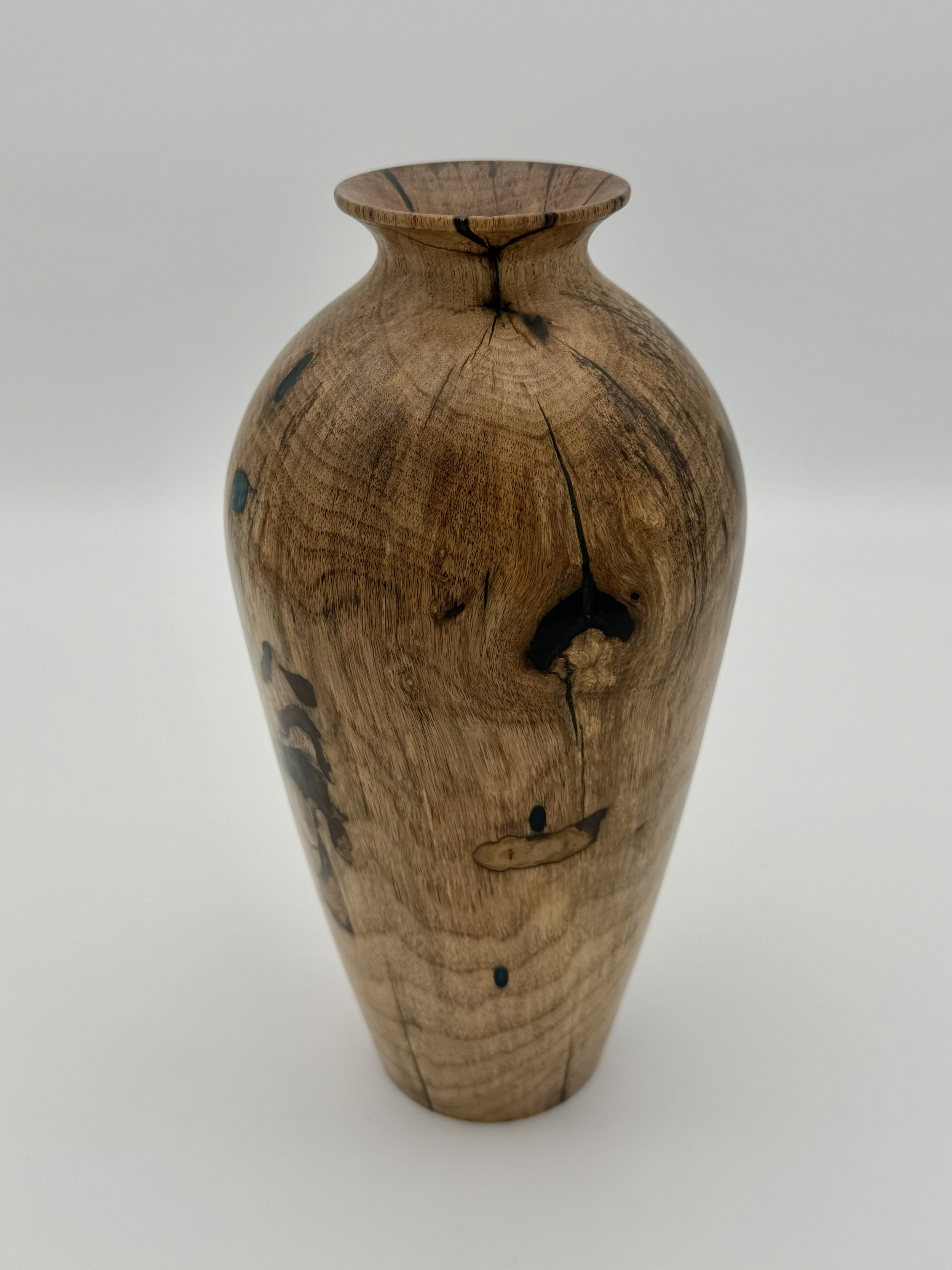
Yes. I turned it.
For the moment, I’m giving it a little time to settle. Wood and resin occasionally need to renegotiate their relationship after turning, so I want to make sure any tiny gaps that appear are repaired and the finish is exactly where I want it before the piece heads to the Cary Gallery of Artists.
I still won’t say I was wrong to be repulsed by the original log.
But I’m very glad I brought it home.